Why Phonetic Denture Design is the Third Pillar of Performance.
Every Millimetre Matters for the Singing Denture Wearer
For a professional vocalist, the mouth is more than just a part of the face—it is the resonator, the articulator, and the very housing of their instrument. When tooth loss occurs, the transition to dentures can feel like a threat to a career or a lifelong passion.
The traditional approach to dentures focuses primarily on "chewing and smiling." However, for those who rely on the precise physics of sound, a third pillar is required: Phonetics.
The Science of the "Musical Mouth"
The oral cavity acts as a resonance chamber. Every millimeter of change in the palate's thickness or the position of a tooth can alter the "timbre" (color) of a note or the clarity of a lyric. Modern Musico-Dentistry looks at the mouth through the lens of biomechanics and acoustics.
1. The Role of Facial Musculature
Speech and song are governed by a complex web of muscles. The orbicularis oris (the muscles of the lips) and the buccinator (often called the "trumpeter’s muscle") must work in perfect harmony. If a denture is too bulky, it hampers these muscles, leading to jaw fatigue and a loss of fine motor control during difficult vocal runs.
2. Oral Proprioception: The "Sixth Sense"
Your tongue and cheeks have "mechanoreceptors" that tell your brain exactly where they are in space. When a denture is placed, this sensory feedback loop is reset. High-quality prosthetics are designed to be as thin and stable as possible—often using Cobalt-Chrome alloys—to ensure the tongue still "feels" the mouth accurately, allowing for intuitive pitch stability.
How Denture Design Affects Specific Sounds
In vocal performance, "near enough" isn't good enough. If the denture technology isn't phonetically inclined, common issues arise:
The "S" and "Z" (Sibilants): These require a precise 1.0–1.5 mm gap between the upper and lower teeth. If the space is too wide, you’ll hear a whistle; if it’s too narrow, a lisp occurs.
The "F" and "V" (Labiodentals): To stick the landing on these sounds, the upper teeth must lightly touch the "wet-dry" line of the lower lip. Incorrect length can turn a "fine" into a "vine."
The "T," "D," and "L" (Palatolinguals): These depend on the tongue striking the roof of the mouth. An overly thick acrylic base in the "rugae" area (the ridges behind your teeth) can muffle these consonants, making lyrics sound "muddy."
Adapting Your "New Instrument"
If you are a singer transitioning to dentures, the "Try-In" stage is your most important rehearsal. It is the time to evaluate not just how you look, but how you resonate.
The Vocal Integrity Trial
When testing new dentures, singers should practice this structured phonetic and musical routine:
The Articulation Check:
Plosives: "Papa bakes big muffins" (Tests the lip seal).
Sibilants: "Six zebras zigzag swiftly" (Tests the airflow gap).
The Scat Test: Rapid-fire syllables like "ba-da-ba-doo" to ensure the dentures stay seated during fast articulation.
The Dynamic Range Test (Piano-Forte): Sustain a middle-range "Ah," starting very softly (pianissimo) and swelling to a loud volume (fortissimo). If the denture "flutters" or lifts under high air pressure, the posterior seal needs adjustment.
The "Jaw Hinge" Test: Perform large interval leaps (e.g., Low C to High C) on an "Ooh" or "Ah" vowel. If the denture edges are too thick, the jaw bone can "kick" the denture loose as you open wide.
The Vibrato Check: Sing five-note descending scales (5-4-3-2-1) using "Loo-loo-loo" or "Nee-nee-nee." This ensures the tongue has enough "floor space" to move rapidly without
Pro-Tips for the Stage
Stability is Key: For high-class performers, implant-supported dentures or custom-fitted partials offer the highest security. These prevent the "seal" from breaking during a powerful high note, giving you the confidence to perform without fear of movement.
Material Matters: Chrome cobalt bases can be cast much thinner than traditional acrylic, reducing the "foreign object" sensation and leaving more room for the tongue to move.
Restoring Clarity at SIDISonix Denture Boutique
At SIDISonix Denture Boutique, we believe you shouldn't have to choose between your teeth and your timbre.
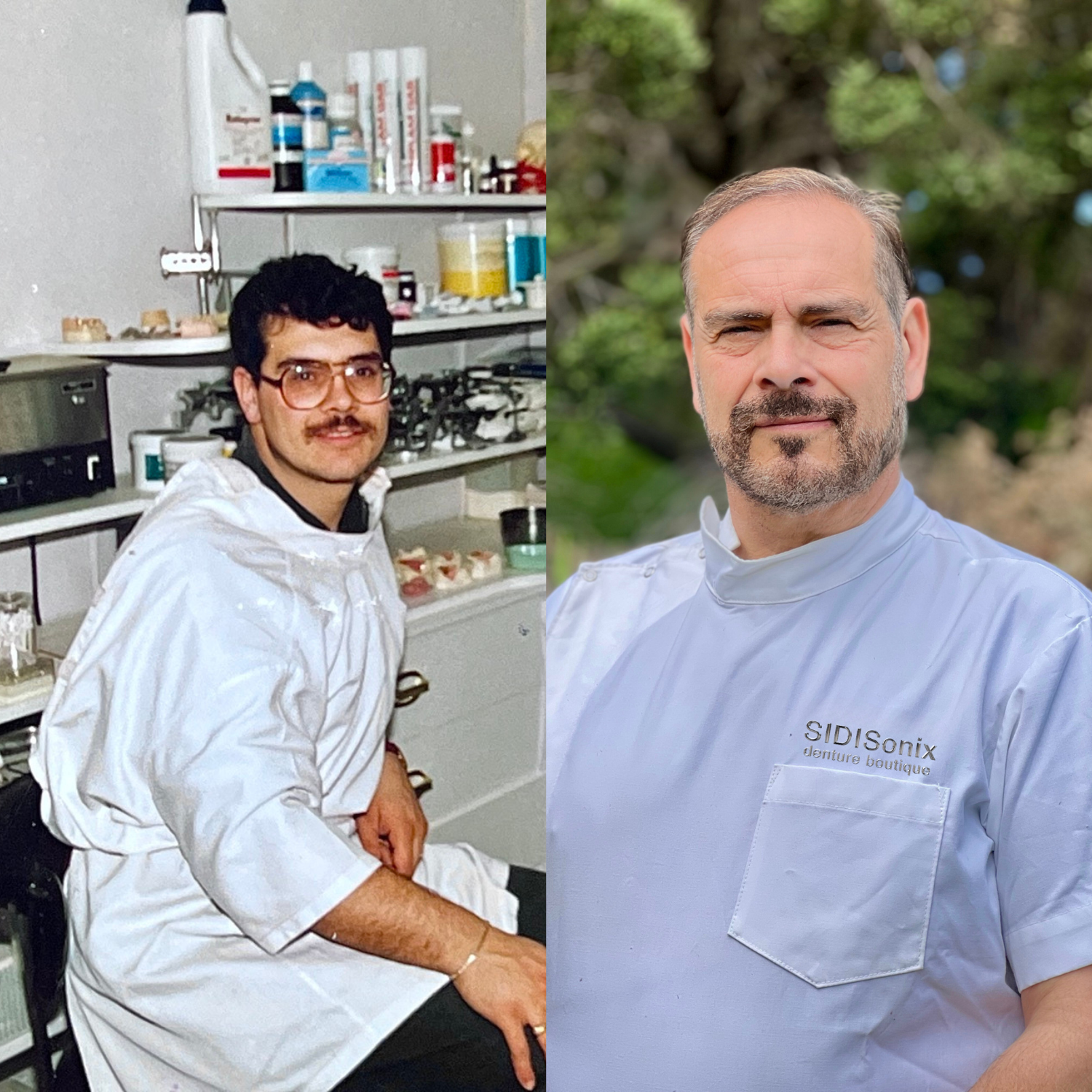
Our lead clinician, Dr. Sebastian, brings a unique dual-expertise to the clinic with 40 years of dental practice and 8 years as a professional vocal coach and phonetics expert. While his innovations are designed to meet the rigorous demands of professional singers, this level of phonetic precision benefits every patient. Whether you are performing on stage or simply sharing a conversation over coffee, Dr. Sebastian’s deep understanding of oral biomechanics ensures that your speech remains articulate, clear, and effortless.
By combining technical dentistry with the science of sound, we create custom removable prosthetics and implant solutions that harmonize your smile with your natural voice.
We’re constantly sharing new updates and expert perspectives on our blog. Don’t miss out—click below to see what else we’ve been writing about.